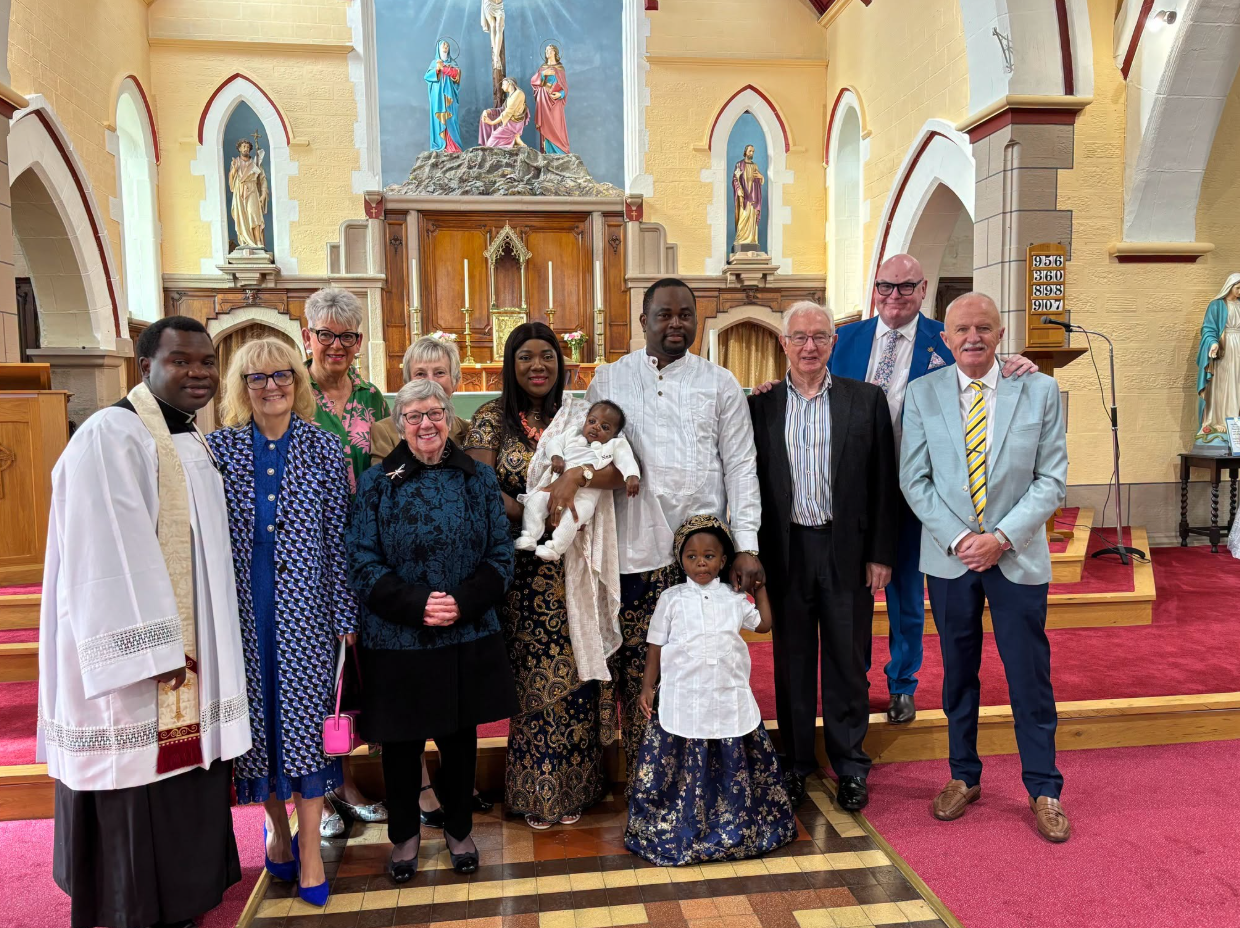
Every year or so, Swindon Catenians organize a short overseas trip for members, and this year from 9th – 12th of April some 44 members, guests and wives travelled to Arras, the prefecture of the Pas-de-Calais region. The visit was based around the First World War Battle of Arras in 1917.
LE DÈPART
It was a dark and blustery morning at about 5 a.m. when 44 members, wives and guests from Oxford and Ascot & Sunningdale, assemebled at various departure points to join the coach for our “away weekend” in France. For the most part the weather looked reasonable, and all were excited about the prospect of what lay ahead. Encouraged to ‘sit back and enjoy the ride’ by our dependable chauffer, Simon, we set out for a 3½ hour trip to the Port of Dover for our channel crossing.

Despite the warnings in the Press, going through French Customas and Immigration at Dover was relatively painless and we were soon abord our ferry for the short crossing to Calais. On arrival we then left the Port for the relaxed journey to our hotel in Arras, stopping on the way at Souchez to vsit the striking new museum to the First World War. We then travelled on to Arras and settled into our hotel.
SOUCHEZ
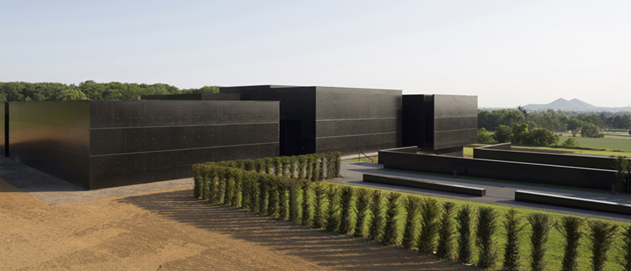
The Museum at Souchez, set in the shadow of Vimy Ridge, the scene of the great achievements of the Canadians in the battle of Arras, is most certainly well worth a visit and is of a striking new design by the architect Pierre-Louis Falouci in black concrete and glass. It complements the French national memorial to the whole 1914-18 conflict at Notre-Damme-de-Lorette, itself set on a hillside seemingly in part suspended in the air. For us, this visit set the scene, for it looked at the 1914-18 conflict from a multi-national viewpoint whilst the rest of our tour would naturally focus more on the Commonwealth actions and actors.
DAY 2
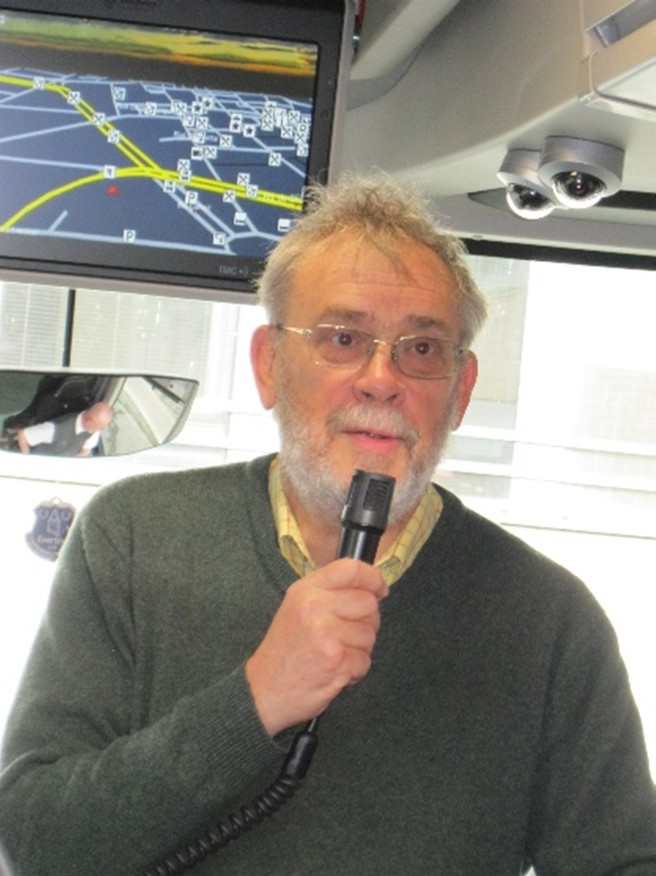
Our second day was bright and sunny and, after our ‘Petit-déjeuner’ we departed our hotel for a full day of visits. As a Catholic Christian organization, our day started with our knowledgeable tour leader and guide Bertie Morris leading us in a short prayer followed by a briefing on the background to the Battle of Arras in 1917. Then, reassured that we were in capable hands, Simon, our chauffer, maneuvered his very large bus around very small French streets and coped without complaint at a seeming absence of any form of parking restriction which made maneuvering his bus very difficult. We eventually arrived at our first destination of the day – Carrière Wellington
Carrière Wellington

In November 1916, the British started preparing for the 1917 spring offensive in and around Arras. Their stroke of genius: to have the New Zealand tunnellers connect up the town’s medieval chalk extraction quarries with tunnels to create a network of underground barracks, large enough to accommodate up to 24,000 soldiers, and the plan was that the attacking force would be able to hide from the enemy and appear at H- hour from the ground.
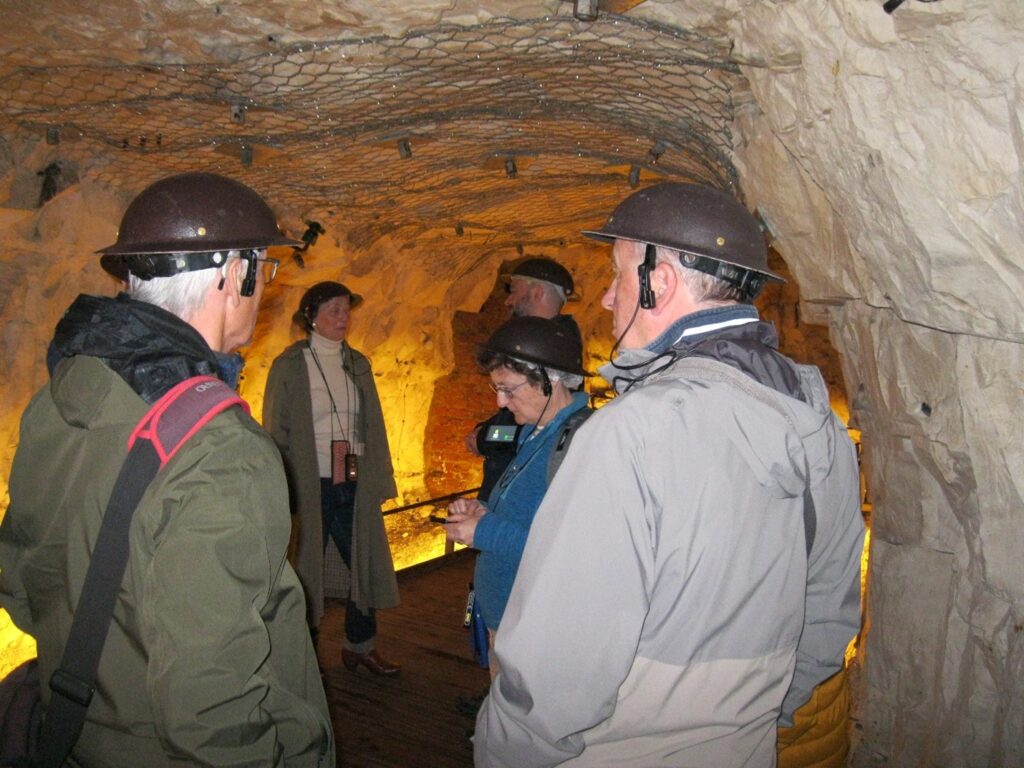
As a part of the tour you all have to wear first World War steel helmets which were very heavy and most uncomfortable!
COMMONWEALTH WAR GRAVES COMMISSION
Then we went on to visit the Commonwealth War Graves Commission (CWGC), Visitor Centre at Beauraines which offers a behind the scenes look at how the CWGC cares for 1.7 million men and women of the Commonwealth who died during the two World Wars.
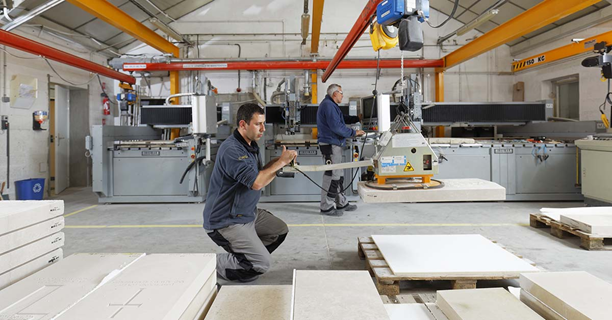
There we learnt that each year to date their work continues both in the very high standard of maintenance of the memorials, and in the identification (if possible) and interment of human remains that are still found every year. Those who established the Commission after the First World War determined that all military cemeteries should be like “an English garden” so that our fallen would lie ‘in a corner of a foreign field that was, forever, England’.
AMIENS AND THE THIEPVAL NATIONAL MEMORIAL

We travelled to Amiens for a light lunch in the sunshine and many of us took the opportunity of viewing the magnificent Cathédrale Notre-Dame d’Amiens, the largest Cathedral (by volume) in France. The cathedral is situated on a slight ridge overlooking the River Somme in Amiens, the administrative capital of the Picardy region of France. The Cathedral was built almost entirely between 1220 and 1270, an amazingly short period for such a magnificent structure.
And then on the way back to our hotel in Arras we stopped at the Thiepval Memorial at the heart of the Somme battlefields.
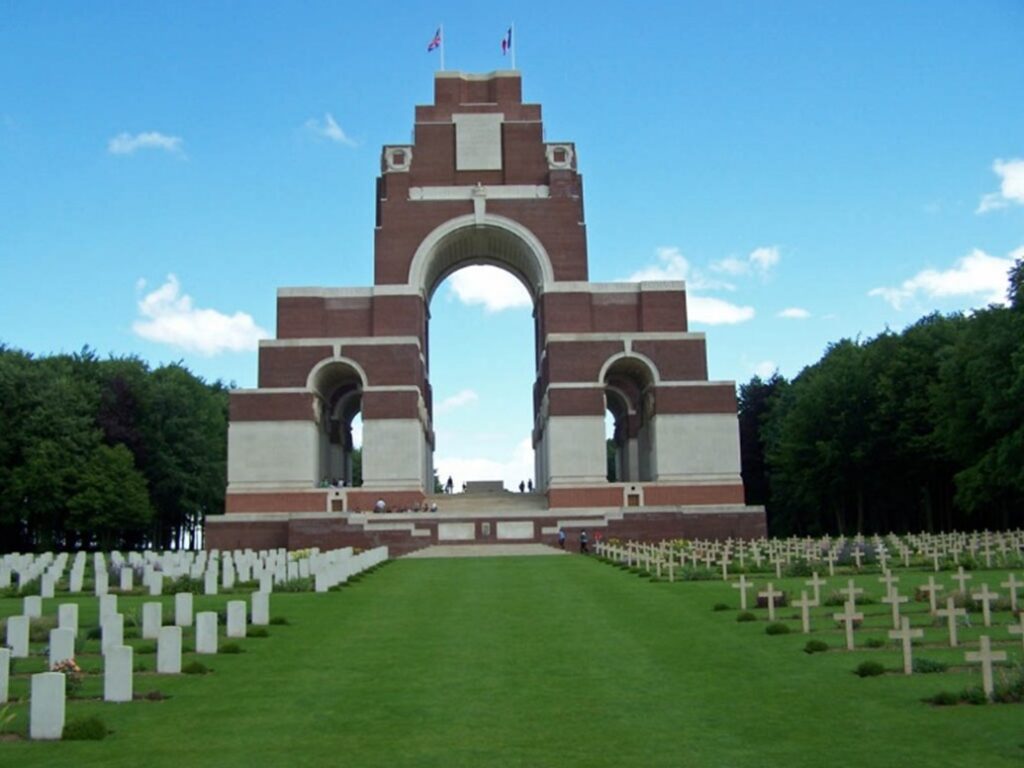
The Thiepval Memorial is the largest Commonwealth war memorial in the world, dedicated to over 72,000 British and South African soldiers with no known grave who died in the Battles of the Somme (1915–1918). Designed by Sir Edwin Lutyens and unveiled in 1932, it stands near the site of the former village which was a British target on the first day of the battle.
Several of our party were able to identify relatives whose names are inscribed on the memorial
DAY 3
For Day three the party spilt into two parts – those who wished to have a rest day and “do their own thing” around Arras, and the others who wished to drive on more to look at the contribution of the ANZAC and particularly the Australians at Villers-Bretonneux.
THE AUSTRALIAN NATIONAL MEMORIAL
The Australian National Memorial is located across the back of the Villers-Bretonneux Military Cemetery and commemorates the Australian soldiers who served in France and Belgium during the 1914-18 conflict.
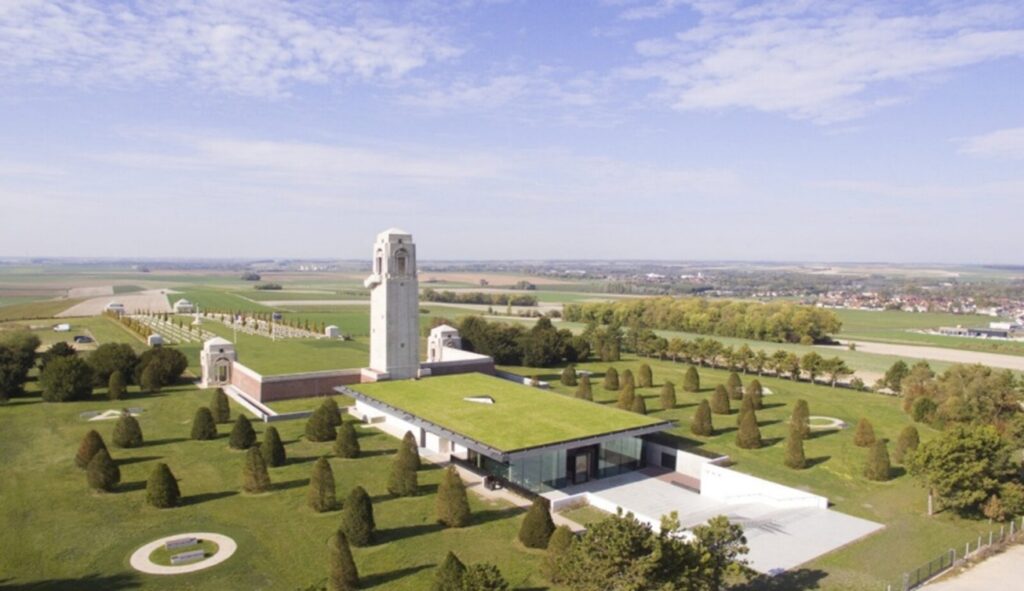
The Memorial was designed by Sir Edwin Lutyens (who also designed the Thiepval Memorial) and was unveiled in 1938 by King George VI.
Villers-Bretonneux became renowned on 23 April 1918 when the German advance during the Spring Offensive led to the capture of the town by German infantry and tanks. On the following day, the Australian 4th Division, supported by the Australian 5th Division, units of the British 8th and 18th Divisions and the French Moroccan Division, counterattacked and recaptured the town, a feat often credited with halting the German advance towards Amiens. On 8 August 1918, the 2nd and 5th Australian Divisions participated in the advance from the town’s eastern outskirts during the opening phase of the Battle of Amiens.
THE CEMETERY
Established on the former ‘“Hill 104”’, the Villers-Bretonneux Military Cemetery was built after the Armistice when graves were brought in from other burial grounds across the adjacent former battlefields.
THE SIR JOHN MONARSH CENTRE
Situated adjacent to the National Memorial the Sir John Monash Centre uses audio-visual technology to tell the story of the Australian experience on the Western Front during the First World War.
More than 295,000 Australians served on the Western Front between 1916 and 1918. Of these, 132,000 were wounded and 46,000 lost their lives. The Sir John Monash Centre ensures that the words, experiences and stories of sacrifice of these men and women are preserved for future generations.
The Centre is named after General Sir John Monash, who brilliantly commanded the Australian Corps on the Western Front in 1918. His victory in the Battle of Le Hamel became a model for subsequent military operations.
AUSTRALIAN CORPS MEMORIAL PARK, LE HAMEL
The Australian Corps Memorial Park is situated on the brow of a hill east of Le Hamel village to the south of the River Somme. The memorial park commemorates over 100,000 Australians who served with the Australian Corps in France during the First World War. The Australian Corps was formed in 1917. It comprised five Australian Divisions which saw service in Belgium and France from 1916-1918.
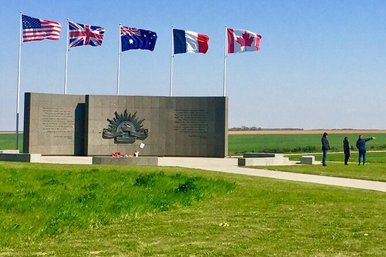
The memorial is located on the site of the final objective of the Battle of Hamel on 4th July 1918. This was the first attack planned and carried out by General Sir John Monash, commander of the Australian Corps
Looking East from the site of the memorial park, across the valley of the Somme river our knowledgeable guide Bertie was able to point to the place where the infamous German ‘ace’, Baron Manfred von Richthofen, “The Red Baron”, was shot down in a field near the Bray-Corbie road, just north of the village of Vaux-sur-Somme.
LA RETOUR
And so, after both parties had met up once again at our hotel and an excellent farewell dinner, the following morning we set off for our return, but not before we paid a final thoughtful and prayerful visit to the Faubourg d’Amiens Military Cemetery.

There one of our number was able to stand beside the grave of a blood relative, and say something of the young person who gave his life so selflessly that we might all live in peace and security. This personalized and brought to life the very meaning of that beautiful place. The group held a brief and thoughtful prayer service around the grave, gave thanks and prayed for the repose of his soul, for themselves and for all of us that we will never forget the sacrifice of these valiant young men who so willingly did their duty with moral courage, honour and distinction and paid the ultimate price.
.
Thanks to Graeme and Celia and Bertie and Nikki for all the planning, organizing, expertise, precision, and good humour that made the trip so very memorable.